Posts in "Engineers Australia" category / Page 5

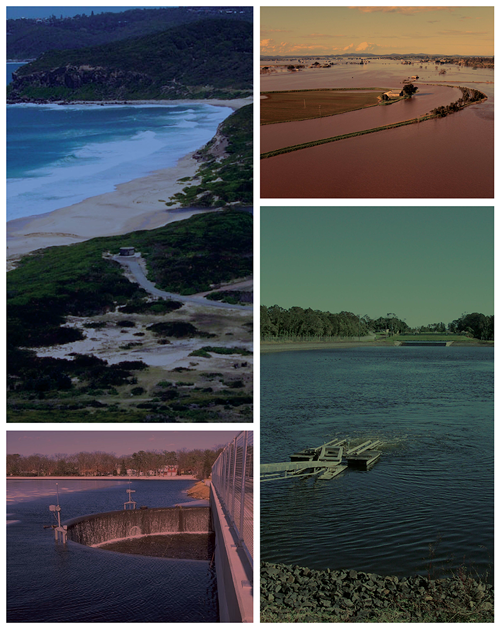
Consequence Assessment and Risk Management of Water Dams

If you happen to be in Brisbane on the 2nd June then, on behalf of the Queensland Panel:

Consequence Assessment and Risk Management of Water Dams

Large water dams can pose a significant flood risk to downstream communities. Recent flood events across Queensland have placed the spotlight upon the management of these dams and the way in which the impact on at-risk communities is managed.

In this technical session, Peter Allen (Department of Energy and Water Supply) will present on the latest developments in Emergency Action Plans (EAPs) including their need, statutory and practical requirements and future directions. James Stuart (SunWater) will present on operational aspects of dam risk management and lessons learnt from recent flood events. Michel Raymond (Seqwater) will discuss the concept of consequence creep and resulting higher standard of upgrades and costs to dam operators and the community.

Date: Thursday 2 Jun 2016 – 5:30 pm to 7:00 pm
Venue: Hawken Auditorium, Engineering House, Level 1, 447 Upper Edward Street, Spring Hill 4004
Cost: EA Members & Students $10.00, Non-members $40.00

Registration is available online.

HWRS2016 Abstract Extension

The 37th Hydrology and Water Resources Symposium (HWRS) will be held in Queenstown, New Zealand, in November and the call for abstracts has been extended till May 8th.

Continue Reading…

HWRS 2016 Abstract Submission Closing Soon

The 37th Hydrology and Water Resources Symposium (HWRS) will be held in Queenstown, New Zealand, in November and the call for abstracts is closing soon!

Engineers Australia’s National Committee on Water Engineering, the New Zealand Hydrological Society, & IPENZ Rivers Group, are pleased to invite delegates to attend the 2016 joint Conference for the 37th Australian Hydrology and Water Resources Symposium, NZ Hydrological Society, and IPENZ Rivers Group.  The Conference is being held in Queenstown, New Zealand from 28 November – 2 December 2016.

The Conference promises to be an unforgettable event that will bring together over 400 delegates, who represent all levels of government, universities, students, researchers, contractors, suppliers and consultants. Come along for a chance to beat the New Zealanders for the coveted Hydrologic games trophy.  The conference will include field trips to the local area.

Please check the website to for conference information  http://www.hwrs2016.com.au

Abstract submission closing soon – Click here for details. We would like to invite abstracts to be submitted through the website.

We look forward to seeing you in Queenstown in 2016.

Charles Pearson
2016 Conference Convenor

EEA 2-Day Stormwater Managment Workshop: June 2016

A 2-day Workshop entitled “Stormwater Management (source control)” has been organised by EEA (Engineering Education, Australia) for Thursday/Friday 2/3 June  2016 in Sydney. The Notes provided in the course are based on the content of the award-winning manual “WSUD: basic procedures for ‘source control’ of stormwater – a Handbook for Australian practice” edited by Professor John Argue AO (University of South Australia). This document is endorsed by Stormwater Industry Association (SIA), Australian Water Association (AWA) and by Dept of Water, Western Australia; it is included as a major reference  in Book 9, Chapter 5 of the 2015 Australian Rainfall Runoff Revision (AR&R).

The content features a balance between the three domains of WSUD (stormwater) practice – quantity control, pollution control and stormwater harvesting. Serious issues of stormwater management in Australia are posed by the prospect of 35 million population of Australia by 2050.

  • How will Sydney’s existing stormwater infrastructure and that of other major population centres in NSW  cope with change under the ‘high density’ option presently being implemented  across the State ?
  • What strategies can be adopted to enable existing (competently-performing) infrastructure to manage these changes without expensive (conventional) upgrade?
  • How can re-development in catchments with existing under-performing stormwater infrastructure be managed to enable the existing in-ground works to progressively meet greater demand without expensive (conventional) upgrade?
  • Must the creeks and natural waterways falling within the jurisdictions of metropolitan and regional municipal agencies within and  outside Sydney be sacrificed to hard-lining in the wake of the proposed expansion?

Positive answers to these and many other questions based on WSUD ‘source control’ practice will be provided in the Workshop as well as a 30-minute presentation by Dr Markus Botte on how the City of Gosnells has incorporated this practice into its cost-effective urban re-growth strategy.

The Workshop will also include results of continuous simulation modelling of high-performing filter-bioretention systems enhanced by treatment taking place in parent soil masses; the fate of dissolved pollutants is singled out for particular attention.

The short course includes: design procedures based on state-of-the-art analyses and best overseas practices adapted to Australia-wide conditions; case study illustrations drawn from field installations   with between 10 and 18 years of Australian operational history; design ‘worked examples’; introduction and access to rainwater tank sizing software applicable across Australia. The Workshop will be led by Professor John Argue AO.

Why you should attend the Workshop:

  • It is presented only once per year in Sydney;
  • It covers the three main domains of WSUD practice – quantity (urban flooding), quality (pollution treatment/control) and stormwater harvesting – in a comprehensive, integrated manner;
  • The (stormwater) retention practices covered in the Workshop are offered in the 2015 AR&R Revision alongside those of detention practice (Book 9, Chapter 5);
  • It earns participants 32 hours of CPD credit with Engineers Australia.

More information about the workshop including course content, cost and Registration Forms is available on the EEA website http://www.eeaust.com.au/ or by calling Damian on (03) 9321 1700.

2016 NZHS HWRS IPENZ Call For Abstracts

The next Hydrology and Water Resources Symposium (HWRS) will be held in Queenstown, New Zealand, in November and the call for abstracts is now open.  We’ve reposted it below.

28 November – 2 December
Millennium Hotel
Queenstown
New Zealand

Continue Reading…

ARR/WSUD Workshop

Overview (Updated 2015-08-11)

The ARR team, in conjunction with the 9th International WSUD Conference, are running an workshop to discuss the latest developments in the ARR revision, specifically in the WSUD and urban drainage space. Topics covered will include an overview of the new short duration IFDs and synthetic rainfall for continuous simulation as well as the design of retarding basins. Dr Peter Coombes will also be presenting on current directions in urban drainage.

When ARR is released there will be significant changes to the recommendations and guidelines across the hydrologic sector, with major flow on consequences to engineering and ecologic practice. This workshop is intended to introduce these changes to practitioners working in the fields of WSUD, short duration design and analysis as well as continuous simulation for process modelling. It is also a significant opportunity for industry practitioners to provide feedback to ARR authors and the editorial team into the direction and final outputs of ARR, which is scheduled for launch later this year.

Draft Schedule

The full day programme will run on Monday 19th October 2015.

Draft Workshop Programme
Time Topic Speaker
0900-0930 Arrival/Registration
0930-0945 Welcome Mark Babister
0945-1000 Major Changes to Urban Catchments James Ball
1000-1030 Outline of the New Runoff In Urban Catchments, Book 9 or ARR James Ball
1030-1100 Morning Tea
1100-1130 Temporal Patterns and Their Influence on Design Mark Babister
1130-1200 Urban Losses Rhys Thomson (TBC)
1200-1245 Urban Drainage and the Urban Water Cycle Peter Coombes
1245-1330 Lunch
1330-1400 Retarding and Detention Brett Phillips (TBC)
1400-1430 Generated Continuous Rainfall Sequences Ashish Sharma
1430-1500 Frequent Rainfall Janice Green
1500-1530 Afternoon Tea
1530-1545 Coastal Interaction TBC
1545-1630 Discussion Session/TBC TBC

Location

Aerial UTS Function Centre
UTS Building 10, Level 7
235 Jones Street, Ultimo

Registration

Full details and costs at: http://www.wsud2015.org/

Printable Flyer

There is a printable PDF flyer (updated 2015-08-11)for distribution.

Full Day 2D Workshop

The Sydney Water Panel is running a full day 2D Modelling Workshop. Those with an interest in two-dimensional modelling and flood hydraulics should find this a fascinating insight into the current techniques for application in solving complex flooding problems. The workshop will also be a great opportunity to network and hear what other 2D modellers are doing.

Event Programme
Time Topic Speaker
0900 – 1000 Arrival/Registration
1000 – 1015 Introduction
1015 – 1100 Appraisal of approaches for assessing bridge losses using a 2D model Bill Syme
1100 – 1130 Morning Tea
1130 – 1215 Assessment of bridge losses using a range of 2D modelling tools – Gold Coast Case Study Andrew McCowan
1215 -1300 Sources of information which are available to validate numerical models (bridge hydraulics) Grantley Smith
1300 – 1415 Lunch
1415 – 1500 Modelling Structures and Bends – Benchmarking Study Bill Syme
1500 – 1600 Direct Rainfall versus Lumped Rainfall-Runoff Modelling Approaches Rhys Thomson
1600 – 1630 Afternoon tea and networking

Date and Location

16th June 2015
UTS Aerial Function Centre Jones Street, Ultimo

Cost

Early Bird Registration (closes 1 June 2015) ==> Members $150 + GST

After 1 June 2015 ==> Members $250 + GST Non Members $300 + GST

Morning Tea, Lunch and Afternoon tea included

Online registration is now open.

For further information contact Scott Button

Email: scott@lyallandassociates.com.au

CPD

Attendance at this session is worth up to 6 Engineers Australia CPD hours.

Printable Flyer

A printable PDF flyer is available for further distribution.

12th Conference on Hydraulics in Water Engineering

On behalf of the Ecohydraulics Committee of the International Association for Hydro-Environment Engineering and Research (IAHR) and the National Committee on Water Engineering of Engineers Australia (EA), I am delighted to invite you to the 12th Conference on Hydraulics in Water Engineering on 9-11 Feb 2016, in Melbourne, Australia. This conference will be run jointly with the 11th International Symposium on Ecohydraulics (ISE2016).

Under the overall theme of Hydraulics and the Environment – Working with Nature, the National Conference on Hydraulics in Water Engineering will focus on the ways in which hydraulics contributes to sustainable engineering investigations and design in the water environment.

It is my pleasure to announce that the 12th Conference on Hydraulics in Water Engineering technical program will include the following:

  • Keynote presentations, including Henderson Oration
  • Technical Sessions with oral and poster presentations on water engineering hydraulics

This conference is being jointly run with the 11th International Symposium on Ecohydraulics (ISE2016), which will take place on 7-12 Feb. Delegates have the option of registering for the full ISE 2016 meeting (including registration for the three-day Hydraulics in Water Engineering conference) or register just for the three-day Hydraulics in Water Engineering conference.

Abstracts are due on the 22nd May 2015. Further details of the conference, submission of abstracts and registration are available on the joint conference web-site http://www.ise2016.org/.

ARR Update March 2105

Book 3 – Peak Flow Estimation released for industry comment

The ARR team is pleased to announce the first complete draft book of the 4th edition of Australian Rainfall and Runoff is released for industry comment. Book 3 covers both regional and at site flood frequency estimation techniques. The at site flood frequency chapter is a significant change from the version previously available (Kuczera and Franks, 2006) and supersedes this version. Please note that this is a draft and as such some of the figures, examples and formatting have not been finalised. The report will be available for industry comment until the end of April. Software for the regional flood frequency estimation method is in the final stages of testing and will be released soon. FLIKE will be also be commercially available for a small price from TUFLOW in the near future.

Project 5- regional flood methods – stage 3 report release

In conjunction with the release of Book 3 Chapter 3 Regional Flood Frequency Estimation the Project 5 regional flood methods stage 3 report and data report by the University of Western Sydney team (lead by Dr Ataur Rahman) are being released. This report provides more detail on the method and supplements the chapter. Stage 3 is the final stage of the project which began in 2008. Thank you to all the project team, state teams and government organisations that provided data for this nationally significant project. This project is a significant advance on the techniques in ARR 1987.

PROJECT 5 VIDEO RELEASE

To accompany the release of Book 3 chapter 3 Regional Flood Frequency Estimation we are also releasing a short background video on the development and implementation of the method.  The video is available on the ARR youtube station.

How to comment on ARR books and chapters

The ARR welcomes comment from industry on all the books and chapters as they are released. In order to capture all the comments we have developed a dedicated comment section on the ARR website. Please link your comment to a specific book, chapter and version to assist with addressing comments.

Hydrology and Water Resources Symposium

The 36th Hydrology and Water Resources Symposium will be held 7-10 December 2015 in Hobart, Tasmania. This event, hosted by Engineers Australia and its National Committee on Water Engineering, is Australia’s leading symposium devoted to hydrology and water resources.

The industry launch of the revised edition of Australian Rainfall and Runoff will be held at the symposium. A session will be dedicated to ARR papers.

Call for abstracts is now open and closes on the 27th of April.

Best Practices for Use of Pre-Releasing for Flood Management

The Panel’s first presentation for 2015 is titled “Use of Pre-Releasing for Flood Management: Best Practices at Leading Dam Owners around the World” and will be given by Dr Amit Chanan.

30th April 2015
5.30 for 6pm Start

Engineers Australia Auditorium
Ground Floor, 8 Thomas St,
Chatswood NSW 2067

Pre-registration is mandatory and while the event is free for Engineers Australia members, non-members entry is $30.

Abstract

Pre-releasing is a dam operating methodology that involves releasing water prior to an expected flood event to create airspace within the dam. The airspace is created with the aim to capture the first of the floodwaters. The presentation compares flood operating procedures for major gated dams at leading dam owners in the USA, Canada, and UK, particularly focusing the role of ‘pre-releasing’ during floods.

The millennium drought was broken in the South-Eastern Australia by major floods in December 2010, followed by another significant wet season in March 2012. This period saw major flooding in the cities of Brisbane, Wagga Wagga and parts of Victoria.

Operation of dams during these floods came under heavy media scrutiny. In case of Brisbane a Commission of Inquiry investigated the operations of Wivenhoe Dam. Similarly, a Ministerial review looked at operations of Burrinjuck and Blowering dams in relation to flooding at Wagga Wagga. Victorian Government also commissioned a review of floods in that state.

Biography

Dr Amit Chanan is a Visiting Fellow at the University of Technology Sydney. His professional career spreads over two decades within the water industry, including senior executive roles within the NSW State Government and local government. Amit is a Fellow of Engineering Australia. He is the Vice Chair of the International Water Association’s Specialist Group on Water Security and Safety Management. He is also a member of the Editorial Board of UK’s Institute of Civil Engineers’ Journal of Municipal Engineering.

In 2013, Amit was awarded with the 2013 Churchill Fellowship to study flood operations at dams in USA, Canada and Europe with particular reference to ‘pre- releasing’ of dams during flood.

Printable Flyer

A printable PDF flyer is available.

« Newer Posts Older Posts »