Latest Blog Posts / Page 13

PDF of The Scour Presentation

Bruce Melville has kindly agreed to post a PDF of the slides from his recent presentation.

Update 2014-07-01 09:56: The amended PDF has now been posted again.

Update 2014-07-01 09:10: We’ve temporarily pulled the PDF down to make some corrections.  It will be reposted shortly.

Local scour at bridge piers – prediction and protection

The Sydney Division, Engineers Australia Water Engineering Panel will like to present a technical presentation on Local scour at bridge piers – prediction and protection by Professor Bruce Melville.

The presentation will cover three aspects of local scour at bridge piers:

  • The NZ methodology for bridge pier scour prediction, which is a physically-justified method based on extensive sets of laboratory data from The University of Auckland and elsewhere.  The method uses a number of multiplying factors (K-factors) for the effects of the various parameters, which influence scour.  The values of the K-factors were determined from envelope curves fitted to the data. The method is, therefore, inherently conservative.
  • A recently completed research project comprising an evaluation of current methods for predicting local scour at bridge piers, including the development of an improved method for adoption in US.  Twenty-three of the more recent and commonly used equilibrium local scour equations were identified and assembled.  The scour depths predicted by these equations for a wide range of laboratory and field conditions were evaluated against a significant quantity of both laboratory and field equilibrium scour data (approximately 928 field and 569 laboratory).
  • The use of riprap as a countermeasure for bridge pier protection.  Most existing equations for predicting the size of riprap that remains stable at the base of bridge piers were based on clear-water scour laboratory experiments.  Experiments undertaken at The University of Auckland reveal that the controlling mechanism for stability of riprap at bridge piers in sand-bed rivers is undermining by dune migration.  A method for riprap size prediction, derived from these experiments, is presented.


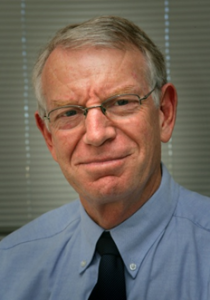
Professor Bruce Melville

Prof

Professor Bruce Melville is Professor of Civil Engineering at the University of Auckland.  His academic career spans more than 30 years, prior to which he spent 6 years working for civil engineering consultants in NZ and overseas on water-related projects.  He is an active researcher with an international reputation in the field of fluvial sediment transport.  His expertise encompasses most aspects of water resources engineering, including hydraulic, hydrological, river, environmental and hydro-electric engineering.  He is a founding member of the Centre for Infrastructure Research and is Associate-Editor of the (ASCE) Journal of Hydraulic Engineering, has served on local and international research committees, and has been a member of many tribunals for water consent hearings.  He has supervised more than 20 PhD students, published over 75 refereed journal papers and has more than 500 citations in academic journals (ISI Web of science).  He received the 2002 ASCE Hydraulic Structures Medal, in recognition of his contributions in the field and was elected to fellowship of the Royal Society of New Zealand in 2006.  In 2007, he received the R.J. Scott Medal from RSNZ for his research contributions and in 2012 he received the Dobson Supreme Technical Award in Transportation Infrastructure.  In 2011, he was promoted to Distinguished Fellowship of IPENZ and was awarded a Hood Travelling Fellowship.


The presentation will be given at the EA Auditorium, Chatswood, on 23th June 2014, with light refreshments from 5:30pm for a 6pm start.  RSVP is requested via the EA booking system.

A full PDF Flyer is available for download and further can be obtained from the PDF flyer.

ISHS2014 Standard Registration Deadline

*** STANDARD REGISTRATION DEADLINE 31 MAY ***

From the organising committee:

I would like to take this opportunity to remind you of the approaching registration deadline for the NCWE 11th National Conference on Hydraulics in Civil Engineering, to be held 25-27 June 2014 in Brisbane, Australia.

The technical program will provide symposium attendees with a unique opportunity to interface with leading Australian and international experts in hydraulic engineering, with presentations on current state-of-the-art practices, latest research results, and practical case histories related to the design and operation of hydraulic structures.

Don’t miss out on the opportunity to register for this important event on the calendar of the hydraulic engineering community. Please see below for more information, and feel free to forward this message to others.  The technical program will include:

The NCWE 11th National Conference on Hydraulics in Civil Engineering of Engineers Australiawill be held in conjunction with the IAHR 5th International Symposium on Hydraulic Structures. The combined event has the theme of “Hydraulic Structures and Society – Engineering Challenges and Extremes”, and will focus on the role of hydraulic structures in meeting the challenge of extreme events while addressing the requirements imposed by our growing population, the environment, agriculture, industry, and tourism for current and future generations.

Keynote lectures will include:

  • Scour at Hydraulic Structures – ENGINEERS AUSTRALIA HENDERSON ORATION
    Professor Bruce MELVILLE, University of Auckland, New Zealand
  • Hydraulics of stepped weirs and dam spillways: engineering challenges, labyrinths of research
    Professor Jorge MATOS, IST Lisbon, Portugal 


Practical Responses to Climate Change – Call for Abstracts

Closing date for abstract submission has been extended until Friday 23 May 2014.
This will be your last opportunity to submit an abstract for this conference

PRCC Conference 2014, Melbourne, 25-27 November 2014, as part of Engineers Australia’s Convention 2014

The conference is being held under the auspices of the:

  • National Committee on Water Engineering
  • National Committee on Coastal and Ocean Engineering
  • Environmental College
  • Sustainable Engineering Society

The conference will provide an opportunity for engineers, policy makers, scientists, planners, academics and others to present, discuss and debate the latest research and practice relating to mitigation of, and adaption to, climate change.

You are invited to submit an abstract for the conference so that you can share your lessons and expertise on a range of structural and non-structural mitigation and adaptation approaches being implemented to manage for a changing and variable climate. You can choose one of the following broad topics:

  • Water and waste water
  • Coastal infrastructure
  • Transport
  • Energy
  • Agriculture
  • Waste
  • Sustainable buildings

Conference Keynote Speakers

The following eminent keynote speakers in our industry have expressed interest in participating in the Conference:

  1. Major General The Honourable Michael Jeffery: Future directions for a sustainable world.
  2. Professor Iven Mareels: Role of Engineers in Climate change adaptation and mitigation
  3. Associate Professor Ron Cox: Sea level rise and other coastal hazards from climate change
  4. Professor Caroline Evans: Low carbon transport
  5. Professor John Thwaites: Legal and political approaches to sustainability
  6. Dr John Vargo: Organisational resilience in the face of climate change

As the Practical Responses to Climate Change conference will take place as a part of Engineers Australia’s Convention 2014, attendees will also have access to the general keynote sessions from John Howard, Tim Fischer, Ita Buttrose and others.

Conference Workshops

As part of the conference, workshops are proposed on Climate Change Policy, Sea Level Rise, and Australian Rainfall and Runoff.

Abstract Submission

The abstract should be no more than 400 words and should include;

  • The title of the paper typed in capital letters and bolded
  • List of authors and their affiliations
  • Contact details for the corresponding authorTopic (from list above)
  • Keywords
  • Text of the abstract

Important Notes

  • Abstracts should describe work which has not been presented at a previous PRCC Conference or elsewhere.
  • At least one author from the accepted paper will be required to register to attend the Conference to present the work
  • Abstracts will be printed in the conference handbook for accepted presentations.
  • Full papers will be peer reviewed.
  • Accepted full papers will be published online on the RMIT Informit database.

Abstracts should be submitted (in word or pdf format) directly to: Dr Mark Jempson

2D Modelling Forum

In conjunction with the National Conference on Hydraulics in Civil Engineering and the International Symposium on Hydraulic Structures, a forum on 2D hydraulic modelling will be held on Thursday 26th June. The forum will include invited presentations, panel discussions and software demonstrations, and provide ample opportunities for questions and answers. Topics covered include:

  • CFD, Physical and Other Modelling Approaches
  • Recent Developments in 2D modelling
  • Applications of Modelling
  • Model supplier forum
  • Direct Rainfall

The forum is a great chance to hear from industry experts and to keep up to date with the latest 2D modelling developments within the industry.

More information on the invited speakers and program can be found here.

ARR Workshop – Brisbane

Date: Tuesday 24 June 2014

Time: 9.00am – 4.00pm

Venue: Hawken Auditorium, Engineers Australia, 445 Upper Edward Street, Brisbane.

Presentations will include:

  • NFRIP
  • Book and Chapter updates and releases
  • Climate Change
  • Regional flood method and software demo
  • Temporal patterns and ARF’s
  • Blockage of Hydraulic Structures: Blockage guidelines –Dr Bill Weeks
  • Rational Method Developments: The future of the rational method
  •  Losses for Design Flood Estimation: Update – urban losses in Qld
  • Open session on Qld Issues

Please note for those who attended the Perth workshop this will largely be the same content.

More information can be found here.

Technical Program is now Available for ISHS 2014

Letter from the organising committee:

Dear Colleagues,

It is my pleasure to announce that the preliminary technical program is now available for the next NCWE 11th National Conference on Hydraulics in Civil Engineering, to be held 25-27 June 2014 in Brisbane, Australia.

The technical program will provide symposium attendees with a unique opportunity to interface with leading Australian and international experts in hydraulic engineering, with presentations on current state-of-the-art practices, latest research results, and practical case histories related to the design and operation of hydraulic structures.

Please see the list of tentatively accepted papers for more details.

STANDARD REGISTRATION EXTENDED TO END OF MAY 2014!!

To provide you with the maximum opportunity to register for this exciting program, we have extended the Standard Registration period to the end of May 2014.

I encourage you to attend this important event on the calendar for the hydraulic engineering community. Please see below for more information, and feel free to forward this message to others.  The technical program will include:

  • Keynote presentations (see below)
  • Technical Sessions with up to 40 oral presentations on Hydraulic Structures from 18 different countries
  • Pre-Symposium Workshop on Australian Rainfall & Runoff
  • Special Forum on 2D Modelling of Hydraulic Structures
  • Technical Field Trip to 3 dams in South East Queensland
  • Visit to University of Queensland Hydraulic Laboratory

The NCWE 11th National Conference on Hydraulics in Civil Engineering of Engineers Australiawill be held in conjunction with the IAHR 5th International Symposium on Hydraulic Structures. The combined event has the theme of “Hydraulic Structures and Society – Engineering Challenges and Extremes”, and will focus on the role of hydraulic structures in meeting the challenge of extreme events while addressing the requirements imposed by our growing population, the environment, agriculture, industry, and tourism for current and future generations.

Keynote lectures will include:

  • Scour at Hydraulic Structures – ENGINEERS AUSTRALIA HENDERSON ORATION
    Professor Bruce MELVILLE, University of Auckland, New Zealand
  • Hydraulics of stepped weirs and dam spillways: engineering challenges, labyrinths of researchProfessor Jorge MATOS, IST Lisbon, Portugal

I look forward to welcoming you in Brisbane in June.

Robert Janssen
Chair, Organising Committee

Technical Presentation: Water Sensitive Urban Design & Ecosystems

Interesting upcoming event in May 2014!

The Sydney Division, Engineers Australia Water Engineering Panel will like to present a technical presentation on Water Sensitive Urban Design and Ecosystems (WSUD) by Dr. Jocelyn Dela-Cruz, Mr. Chris Derry and Dr. Marlène van der Sterren. 

Dr. Jocelyn Dela-Cruz will be presenting ecosystems response modelling for councils and how WSUD can be included in this modelling while Mr. Chris Derry will be presenting on the field monitoring manual he has developed for bio-filtration systems. This will be followed by a presentation from Dr. Marlène van der Sterren on the quantity control of rainwater tanks and their impacts on onsite detention quantity control. The afternoon will be completed with a question and answer and round table discussion on WSUD. The agenda for the afternoon presentation is presented as follows;

Time Presentor Topic
12.30-12.40 Welcome
12.40-13.10 Dr. Jocelyn Dela-Cruz Ecosystem response modelling
13.10-13.30 Mr. Chris Derry Manual for on-ground monitoring of biofiltration systems
13.30-13.45 Tea & Coffee break – light refreshments
13.45-14.15 Dr. Marlène van der Sterren OSD vs rainwater tank debate
14.15-15.00 Q&A and discussion forum


The presentation will be held at the University of Western Sydney, Parramatta Campus, Room PS-EE.G.36 , on Wednesday, 14th May 2014, starting at 12.30pm.

Light refreshment will be provided during the interval at 1.30pm. RSVP via EA booking system is now available.

A full PDF flyer is given in the link below.

Flyer Link: Water Panel Seminar – May2014

Update on Student Thesis Presentations: Introducing Additional Speaker

The Sydney Division, Engineers Australia Water Engineering Panel will like to add an additional speaker to the Student Honours Thesis Presentation. We are proud to introduce Lisa Pomeroy. Lisa graduated from the University of Melbourne with a Bachelor of Environments (Civil Systems) and has since completed her Master of Engineering (Civil).

Lisa Pomeroy – Estimation of Impervious Area for a Victorian Urban Catchment
There is great concern in Australia surrounding the effects of increased impervious areas resulting from urban development. With urban planning placing increased pressure on water sensitive urban design and increased runoff water volumes, the need to estimate imperviousness has become vital. Effective Impervious Area (EIA) is considered to provide a more realistic and representative estimation of the impervious area generating runoff. It is commonly estimated by means of the statistical technique of regression analysis using the rainfall and runoff data for the study area. Impervious area which connects directly to the drainage network is commonly termed Directly Connected Impervious Area (DCIA). It is commonly estimated through the use of aerial photographs and visual analysis. This study estimated the Effective Impervious Area (EIA) for the Kinkora Road Retarding Basin Catchment in Blackburn, Australia, and sought to determine if the estimation of Directly Connected Impervious Area (DCIA) is consistent with the estimate of EIA.

The presentation will be held at the Aerial Function Centre, UTS , on Wednesday, 30th April 2014, with light refreshments from 5.30pm for a 6.00pm start.  RSVP is requested via the EA booking system.

A full updated PDF flyer is given in the link below.

Flyer Link: waterpanelseminar-30apr2014

Student Honours Thesis Presentations

The Sydney Division, Engineers Australia Water Engineering Panel will be hosting a session on Student Honours Thesis Presentation. We are proud to have Dan Morgan and Zhe Liu to present their Honours Thesis in the field of water engineering.

Dan Morgan – Application of Soil Water Balance Model (SWMOD) to Gauged Catchments in NSW
SWMOD is a distributed storage capacity loss model and was developed in 1989 by the Water Authority of Western Australia. It is an established method of rainfall loss estimation in south western WA. It is also theoretically possible to characterise this type of model anywhere in Australia using national soil maps. Today this type of model has extremely limited use in NSW and its suitability remains unknown. This project will test SWMOD on several NSW gauged catchments where the conventional Initial Loss Continuing Loss (ILCL) model has been applied. The selected catchments will include some where the traditional ILCL model performed well and some where it has proved problematic.

The flood hydrographs from each catchment that result from the use of the SWMOD will be compared with the existing flood hydrographs for each catchment and the hydrographs that have resulted from the use of the ILCL model.

Zhe Liu – A New Method for Verification of Delineated Channel Networks

Several methods are used to delineate channel networks. The most widely used are the contributing area method, area–slope method, and grid network ordering method. The number of delineated channels depends on the threshold adopted when using each method. However, the appropriate threshold value required to delineate channel networks, and their corresponding accuracies, are still uncertain.

The consistency between the delineated channels and actual channels can be evaluated by carrying out extensive field surveys, but these require significant time and cost. Accurate knowledge of delineated channel networks is vital, and is achievable more efficiently and simply. A new method of calculating the accuracy of delineated channel networks is introduced in this study. Channel cross-section profiles throughout the channel network were examined and three new incision indices were derived: an incised channel index, a partially incised channel index, and a non-incised channel index. The indices were found useful for setting appropriate threshold values for actual channel networks.

The presentation will be held at the Aerial Function Centre, UTS , on Wednesday, 30th April 2014, with light refreshments from 5.30pm for a 6.00pm start.  RSVP is requested via the EA booking system.

A full PDF flyer is given in the link below.

Flyer Link: Water Panel Seminar – Student Thesis Presentation Apr2014

« Newer Posts Older Posts »