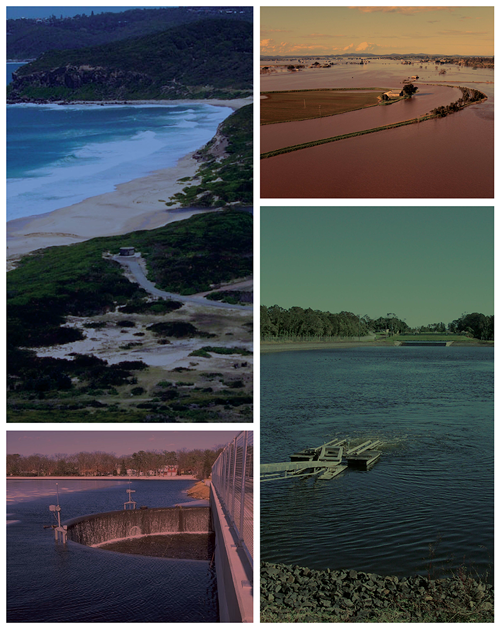
Posts in "Engineers Australia" category / Page 3

12 Days until HIWE2017 and Workshops

Registrations are filling fast and time is running out for the remaining places at the Hydraulics and Water Engineering Conference 2017 – 13th to 16th November, Dockside, Sydney. Our programme at a glance includes highlights such as:

The full programme is available online.

Hydraulic Workshop
The day starts with a Q&A session featuring prominent hydraulic modellers discuss the latest techniques and the future direct of 2D modelling. They will discuss cloud storage, GPU cards, calibration techniques, CFD and much more. Mark Forest, Practice Leader – Floodplain Management and Surface Water Modelling, HDR Engineering, Reno Nevada, USA, talk on the developments and evolution of HEC-RAS. Hear and question Software developers and vendors on the latest developments and innovations.  So far TUFLOW, DHI, 12d, Innovyze, HEC 2D and Waterride are confirmed to be present.  See the latest on Monte Carlo hydraulic modelling with direct examples of these techniques (including the Brisbane River flood study) in practice from front line engineers.

Registration Fees Will Rise on the 6th of November
Standard registration closes on 6th November and late fees will apply after that time.  Register now to lock in the standard rate.

Hydraulic Modelling Workshop @HIWE2017

With registrations from practitioners, government employees, academics, and students, and an action-packed program, HIWE is turning into a must attend event. See below for our program at a glance:

  • A choice of a Hydraulic modelling workshop with all the latest tips and tricks to put you ahead of the game or a trip to the Water research laboratory to see the physical models – there is something for everyone.
  • Find out the pros and cons of the direct rainfall method. It saves you time but is the answer as good as more traditional methods. This workshop will outline techniques that you will need to demonstrate your direct rainfall model is robust.
  • Over 40 papers on practical applications as well as hydraulic theory
  • The prestigious Henderson Oration to be given by Prof. Ron Cox, UNSW

Hydraulic modelling workshop – Wednesday

A must attend event for any Hydraulic modeller. The day will feature high profile invited speakers on the issues that are topical in Hydraulic modelling. What will you learn:

  • What will we be using in 5 years- new technologies and techniques
  • How to approach the practical problems hydraulic modellers face every day
  • What are the latest advances the software packages are offering
  • What is Monte Carlo and practical advice in the application

Get a copy of the detailed flyer to convince your boss you need to attend!

Program at a glance

Monday Tuesday Wednesday Thursday
Morning Paper sessions Hydraulic modelling Workshop: Hydraulic modelling: where will we be in 5 yrs Paper sessions
Morning tea
Morning session 2 Paper sessions Hydraulic modelling Workshop:

Practical problems in Hydraulic Modelling

Paper sessions
Lunch
Afternoon session 1 Paper sessions Direct Rainfall Workshop Hydraulic modelling Workshop: Innovations in 2D modelling Field trip: UNSW Water Research Lab Paper sessions
Afternoon tea
Afternoon session 2 Paper sessions Direct Rainfall Workshop Hydraulic modelling Workshop: Monte Carlo: All your questions answered Field trip: UNSW Water Research Lab Paper sessions
Evening Welcome Drinks Henderson Oration: Ron Cox Conference Dinner

The National Manual and recent research in the flood risk space

Overview

The Water Panel is running a full day seminar on the latest advances in the flood risk space and the National Manual with a specific focus on the recently released Handbook 7: Managing the floodplain: A guide to best practice floodplain management.  This publication provides guidance to assist floodplain managers in defining and managing flood risk on current and future developments.

Provisional Schedule

Time Topic Speaker
10:00 – 10:15 Overview of the day
10:15 – 11:00 National best practice flood manual Duncan McLuckie (OEH)
11:00 – 11.30 Morning tea
11:30 – 11:50 Floodways Mark Babister, (WMA)
11.50 – 12.10 National manual – hazard guidelines and cars in flood waters Grantley Smith (WRL)
12.10 – 12.30


National emergency response classification Angela Toniato (OEH)
12.30 – 1.00 National manual – planning guideline Duncan Mcluckie (OEH)


1.00 – 2.00 Lunch
2:00 – 2:30 Why people drive into flood waters Andrew Gissing (Risk Frontiers)
2.30 – 3:00 Latest investigations into flood signs John Hart (RMS)
3:00 – 3:20 Human Element of Shelter in Place Matalena Tofa (Risk Frontiers)
3:30 – 4:00 Afternoon tea
4.00 – 4.30 Shelter in place Mark Babister (WMA) and

Chris Thomas (Advisian)

4:30 – 5:00 Where to from here ????

Additional Information

The seminar will also showcase some interesting research in the flood risk space including research into colours of road signs for evacuations and why people enter flood waters. Additional discussions will be held on the supporting guidelines, such as:

  • Guideline 7-1 Using the National Generic Brief for Flood Investigations to Develop Project Specific Specifications
  • Guideline 7-2 Flood Emergency Response Classification of the Floodplain
  • Guideline 7-3 Flood Hazard
  • Template 7-4 Technical Project Brief Template
  • Guideline 7-5 Flood Information to Support Land-use Planning
  • Guideline 7-6 Assessing Options and Service Levels for Treating Existing Risk
  • Practice Note 7-7 Considering Flooding in Land-use Planning Activities

This event is for anyone who works in floodplain management, Council engineers, Consultants as well as those involved in emergency planning.

Details

Date and Time: 19th September 2017
Registration Opens: 9am
Formal Start: 10am
Venue: UTS Aerial Function Centre
Tickets:

  1. EA Members $100 (includes Students)
  2. SES Members $100 (discount code: SES2017)
  3. BOM Staff $100 (discount code: BOM2017)
  4. FMA Members $100 (discount code: FMA2017)
  5. Non-Members: $130
  6. Afternoon only $65 (includes lunch)

Register online at: https://www.cvent.com/d/r5qtj1/4W

Murray Darling Basin Plan – Rollout Update

The Murray Darling Basin Plan guides governments, regional authorities and communities to sustainably manage and use the waters of the Basin. The Plan came into effect in November 2012, and it will be reviewed and revised throughout a 7 year implementation phase.

After the very informative Q&A style debate that was held by the Water Engineering Panel back in November 2010 in relation to the merits of the then draft Plan, we invite you to attend this talk from the Chief Executive of the Murray Darling Basin Authority, Mr Phillip Glyde who will provide an update on the progress that has been made in rolling out the Plan in the last 5 years.

About the Speaker
Phillip Glyde (Chief Executive)

Phillip Glyde has been the Chief Executive of the Murray-Darling Basin Authority since January 2016. Immediately prior to this Phillip worked for the Department of Agriculture for nine years where he had responsibility for:

  • Agriculture, fisheries and forestry policy and progress; International trade and market access;
  • The regulation of live animal exports;
  • Export certification services for food; and
  • The Australian Bureau of Agricultural and Resource Economics and Sciences (ABARES).

Phillip joined the Australian Public Service in 1980 and has worked on natural resource management, industry and environment policies in a number of Australian government departments and overseas. At a national level Phillip has worked in the departments of Agriculture, Prime Minister and Cabinet, Environment, and Resources and Energy. Phillip has also worked at the Resource Assessment Commission and the Commonwealth Scientific and Industrial Research organisation (CSIRO). Phillip has an Honours Degree in Natural Resource Management from the University of New England and a Bachelor of Economics Degree from the Australian National University.

VENUE
Harricks Auditorium
8 Thomas Street Chatswood NSW 2068

DATE & TIME
Tuesday 22 August 2017 5.30 pm for a 6.00 pm start

Light refreshments will be provided prior to the presentation. Sponsored by Lyall and Associates.

Registration
To ensure your place pre-registration is mandatory.

EA Members and Students: Free
All others: $30

Printable Flyer
A printable flyer is available.

Key speakers announced for Hydraulics in Water Engineering Conference

The HIWE 2017 committee are pleased to announce the following keynote speakers:

  • Ron Cox: Associate Professor and Director of External Relations in the School of Civil and Environmental Engineering, UNSW
  • Prof. Greg Ivey, Deputy Dean (Research), The University of Western Australia
  • Dr Heide Friedrich: Senior Lecturer, The University of Auckland

The organising committee is currently finalising an exciting programme of technical presentations.

In addition to the planned three days of technical presentations, a half day workshop is planned to discuss and train for the updated hydraulic methods in both the updated release of Australian Rainfall and Runoff with associated knowledge of the key advances from leading industry figures.

We are delighted to announce Assoc. Prof Ron Cox of the University of New South Wales, Sydney will deliver the Henderson Oration.

The Henderson Oration recognises the contribution of the science of hydraulics to the practice of hydrology and water resources engineering.

Register before 1 September 2017 to secure early bird price.

54th Presentation Of EEA 2-Day Stormwater Management Workshop: Sydney, May 2017

A 2-day Workshop entitled “Stormwater Management (source control)” has been organised by EEA (Engineering Education, Australia) for Tuesday/Wednesday, 30/31 May, in Sydney. The Notes provided in the course are based on the content of the award-winning manual “WSUD: basic procedures for ‘source control’ of stormwater – a Handbook for Australian practice” edited by Professor John Argue AO HonFIEAust (University of South Australia). This document is endorsed by Stormwater Australia, Australian Water Association (AWA) and by Dept of Water, Western Australia; it is included as a major reference in Book 9 (Urban Storm Drainage) of the current AR&R Revision.

The content features a balance between the three domains of WSUD (stormwater) practice – quantity control, pollution control and stormwater harvesting. Serious issues of stormwater management in Australia are posed by the prospect of 35 million population of Australia by 2050.

  • How will Sydney’s existing stormwater infrastructure and that of other major population centres in NSW cope with change under the ‘high density’ urban consolidation option presently being implemented by councils and the state government ?
  • What strategies can be adopted to enable existing (competently-performing) infrastructure to manage these changes without expensive (conventional) upgrade?
  • How can re-development in catchments with existing under-performing stormwater infrastructure be managed to enable the existing in-ground works to progressively meet greater demand without expensive (conventional) upgrade?
  • Must the creeks and natural waterways falling within the municipal jurisdictions of the Greater Sydney area as well as those administered by regional municipal agencies in NSW be sacrificed to hard-lining in the wake of urban expansion?

Positive answers to these and many other questions based on WSUD ‘source control’ practice will be provided in the Workshop as well as a 30-minute presentation on how the City of Gosnells WA has incorporated this practice into its cost-effective urban re-growth strategy.

The Workshop will also include results of continuous simulation modelling of high-performing filter-bioretention systems enhanced by treatment taking place in parent soil masses; the fate of dissolved pollutants is singled out for particular attention.

The short course includes: design procedures based on state-of-the-art analyses and best overseas practices adapted to Australia-wide conditions; case study illustrations drawn from field installations   with between 10 and 18 years of Australian operational history; design ‘worked examples’; introduction and access to rainwater tank sizing software applicable across Australia. The Workshop includes an (optional) overnight tutorial exercise. The Workshop will be led by Professor John Argue.

Why you should attend the Workshop –

  • This is likely to be the only presentation of the Workshop in Sydney this year;
  • It covers the three main domains of WSUD practice – quantity (urban flooding), quality (pollution treatment/control) and stormwater harvesting – in a comprehensive, integrated manner;
  • The (stormwater) retention practices covered in the Workshop are featured in the 2017 AR&R Guidelines Revision (Book 9 – Urban Storm Drainage, currently being completed);
  • It earns participants 32 hours of CPD credit with Engineers Australia.

More information about the workshop including course content, cost and Registration Forms is available on the EEA website http://www.eeaust.com.au/ or by calling Emily on (07) 3226 3021.

Updated 21st April for change in date of the course.

Engineers as Leaders – College of Leadership and Management Info Night

The College of Leadership and Management (CLM) is holding a free information session on ‘all things CLM’, asking all engineering professionals to join the leadership conversation!

Date: Tue 4th April, 2017
Time: 5:30 for a 6pm start
Place: Engineers Australia Chatswood office

For more information about the event and to register, please see the attached flyer or access the link below.

Note – this event is also open to non-members of Engineers Australia who want to learn more about this new college. Once non-members enter their email address, the system should not ask you for a password. Members who have forgotten their password will be emailed a link to re-set it, as once you are signed in, you will not need to re-enter your contact details in the registration form for this event. Please let me know if you are having any trouble registering through the link below.

The registration link is https://www.engineersaustralia.org.au/portal/event/engineers-leaders-join-conversation

A PDF flyer is available.

Getting Started With ARR2016: The Data Hub Is Your Friend

ARR Data Hub, How To and Q&A

This presentation will demonstrate the use of the Australian Rainfall and Runoff data hub. The ARR Data hub is your one stop shop for design flood estimation inputs.

The talk will outline the methodology used and the benefits of the data hub. A how to guide for some of the new aspects of ARR will be presented for example how to apply storm losses and preburst.

The seminar will feature a question and answer session on the new ARR application.

Details

11th April 2017
BoM Auditorium
Level 15
300 Elizabeth Street
Surry Hills NSW 2000

Online registration is mandatory. Costs:

$0 for Members, Students and Bom Staff (BOM Discount Code: BOM2017)
$30 for all others.

Speaker: Mr Mark Babister

Mr Mark Babister is a national leader in water engineering, specialising in flood
estimation and floodplain management. Mark has over 30 years’ experience and has
successfully led an extensive number of significant hydrologic, hydraulic, floodplain
management, infrastructure and dam studies for a wide range of water managers and infrastructure owners. As Managing Director of WMAwater, Mark runs a specialised water engineering consultancy employing more than 35 water engineers in three offices.

Mark has been instrumental in the update of Australian Rainfall and Runoff (ARR) which is the national guide for design flood estimation. Mark chaired the technical committee, was a member of the steering committee overseeing the project and is a co-editor of Australian Rainfall and Runoff. Mark has played a key role in development of a number of other guidelines for water engineering in Australia.

Mark has undertaken a number of expert advice roles including the Queensland Floods Commission of Inquiry, Natural Disaster Insurance Review, Ministerial Advisory Council for the Wivenhoe Manual, and the Brisbane River Catchment Flood Study – Independent Panel of Experts. Mark was recently named the Sir John Holland Civil Engineer of the Year for 2017.

A printable PDF flyer is available for download.

Call for Abstracts for the 13th Hydraulics in Water Engineering Conference in Sydney, 13-16 November 2017

The National Committee on Water Engineering and Engineers Australia is pleased to announce that the 13th Hydraulics in Water Engineering Conference will be held at the DockSide, Sydney on 13-16 November 2017 (http://hiwe2017.com.au/). The conference will cover all aspects of Hydraulics in Water Engineering.
The Scientific Committee of the 13th Conference on Hydraulics in Water Engineering is inviting Authors to submit Abstracts to any of the following themes.

Conference Themes

  • Applied Hydraulics         (Best engineering practice, Risk management, Climate change adaptation, Education)
  • Hydraulic structures     (Conveyance structures, Dam operations, Hydropower, Flow structure interactions)
  • Infrastructure                    (Stormwater, Bridges, Pipes and pumps, Irrigation)
  • Coastal Hydraulics        (Ports and harbours, Shoreline protection, Geomorphology)
  • Riverine Hydraulics        (Rivers, Estuaries, Sediment transport, Wetlands)
  • Numerical methods      (Computational Fluid Dynamics, Smoothed-particle hydrodynamics, Flood forecasting)
  • Environmental                  (Ecohydraulics, Environmental fluid mechanics, Ocean outfalls, Stratification, Water quality)
  • Hydraulic Methods      (Technology, Innovations, Physical modelling, Data collection, Industrial processes)

Submission Details

Download the Abstract Template provided and submit all Abstracts to abstracts@hiwe2017.com.au by 31st March 2017.

Once the Abstract has been accepted, authors are required to submit a full paper for peer review.

Further details and the Abstract Template can be found on the conference webpage: http://hiwe2017.com.au/call-for-abstracts/

Key Dates for your diary

Abstract submission closes                                         31 March 2017
Notification of acceptance of Abstracts                     28 April 2017
Full papers due                                                            23 June 2017
Final date for submission of revised full papers         15 Sept 2017
All oral presentation to be submitted                          October 2017

Call for applications – JD Lawson Scholarship

The Civil College National Committee on Water Engineering is calling for nominations for the JD Lawson Scholarship. The scholarship recognises and encourages a professional engineer who is making an outstanding contribution in hydro-environmental engineering to the professional community. 

Who was JD Lawson?

Jack Dempster Lawson was an Emeritus Professor whose career spanned four decades, and whose contribution to the fields of hydraulic and water resources engineering was and still is profound. After working briefly with the Commonwealth Department of Works and for two years as a Research Hydraulic Engineer with the Snowy Mountains Hydro-electric Authority he joined the University of Melbourne as a Senior Lecturer in 1954. In 1970 he was appointed Professor of Civil Engineering, a position he held until his retirement in 1989. At the time of his death in 1991 he was the world President of the International Association for Hydro-Environment Engineering and Research (IAHR). 

The Scholarship

The scholarship includes up to $5000 for registration, flights and accommodation to attend the 37th IAHR World Congress to be held in Kuala Lumpur, Malaysia from 13-18 August 2017. 

Find out more

To find out more and to nominate, visit our website

Nominations close Monday, 13 February

« Newer Posts Older Posts »